














 +5
 Hamad Akhter
Most advice on how to choose a web design company tells you to look at the portfolio, read the reviews and ask about the process. All three are worth doing. They would not have saved the businesses that call us after a rebuild went wrong, though, because those companies had good portfolios and good reviews too. What hurt them was who owned the accounts, what happened to the old URLs, and what it took to leave.
I run content and SEO at PixelChefs, where we build custom websites for a living, and part of my job is opening up sites another company built and working out why the traffic dropped. Before writing this, I read a lot of guides about this exact topic to see what’s already out there. Most of them cover the portfolio, the reviews and the price. Only a couple tell you to keep control of your own domain and hosting, and none of the ones I read mention what happens to the URLs you already rank for, which is the most expensive mistake on the list.
So this guide follows the order things go wrong, from before you sign to the day you want to leave. Each check has a test you can run yourself, and there is a scorecard at the end for comparing two or three companies side by side.
Check who will own the domain, the hosting and the logins
Start here, because this is the one that turns a bad project into a hostage situation. A web design company that registers your domain under its own account controls your website, your email and your Google rankings, no matter what the invoice says.
On the first call, ask whose name and whose credit card each account will be under. The answer you want is yours, for every one of these.
- The domain name, at a registrar you can log in to.
- The hosting account.
- An administrator login to the website itself.
- Google Analytics and Google Search Console.
- Your Google Business Profile.
- Any paid plugin or software licenses the site depends on.
A good company will not blink at this. On our projects every account sits in the client’s name, and if a client leaves, we move the site to their own account. I mention that only so you know it is a normal thing to ask for.
You can run a test on your current setup today. Try to log in to your domain registrar. If you do not know who it is, or the login belongs to a person who built your site in 2019, fix that before you hire anyone new.
Ask what happens to the URLs you already rank for
If you are building your first website you can skip this section. If you are replacing one, it is the most important part of this guide.
Every page on your current site has an address, and Google has spent years learning what each address is about. When a new site launches with different addresses and nobody connects the old ones to the new ones, Google treats the pages as gone. The traffic that came with them goes too. It is the most common reason a business calls us, and it almost always traces back to a launch where nobody made a list.
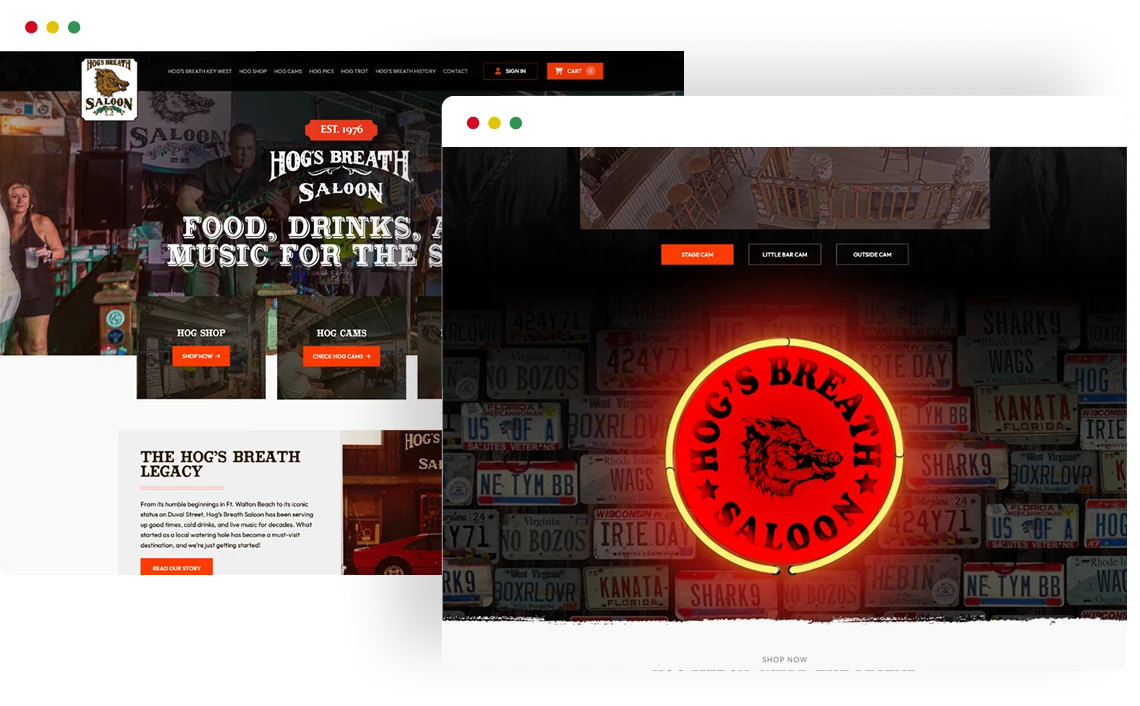
Ask the company to show you the list from a past project. It is usually a spreadsheet with every old URL, what it ranks for, and where it ends up on the new site. Ours gets built before any design starts. When we moved Trust Guss Injury Lawyers to a new site, there were more than 1,000 pages on that list, and every URL that ranked kept its exact address.
Two answers should worry you. One is “we will set up redirects at the end,” because the end is when the budget and the patience have run out. The other is a quote for a redesign from a company that never asked to see your Google Search Console. They are pricing a job without knowing what they could break.
Find out how the web design company builds its sites
There are two broad ways to build a WordPress site. One is to buy a theme and assemble pages in a drag and drop page builder like Elementor, Divi or WPBakery. The other is to write the code for your site specifically. The first is faster and cheaper. The second is lighter, quicker to load and easier to change later without something else breaking.
Neither is wrong. A page builder site at $3,000 is a fair deal. The problem is paying $20,000 for one, and you cannot tell which you are getting from a screenshot.
You can tell in two minutes, though. Open any site from the company’s portfolio, right click, and choose View Page Source. Press Ctrl and F, then search for elementor, divi and wpbakery. If one of them shows up dozens of times, that is how the site was built.
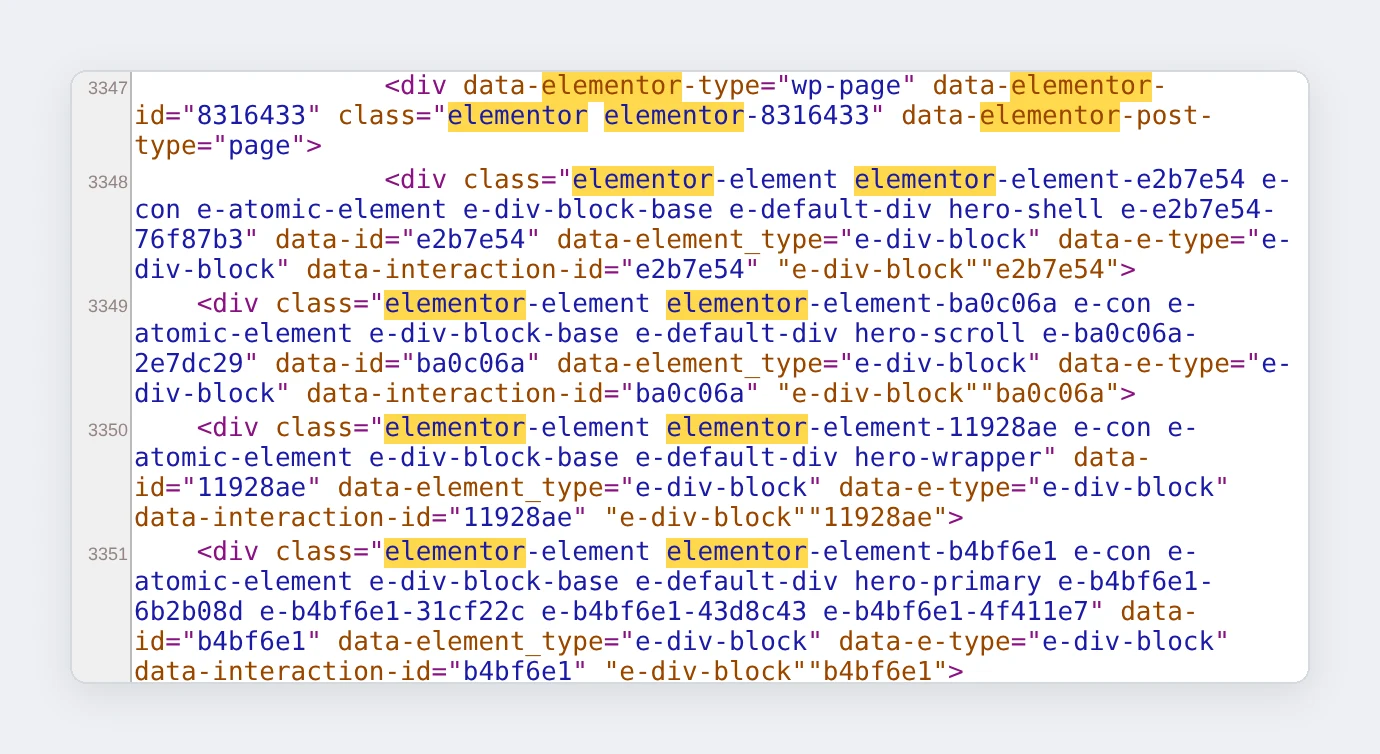
Then take two portfolio sites to Google’s free PageSpeed Insights tool and run them on mobile. Do not test the agency’s own website, because everybody polishes their own. Test the sites they built for clients a year or two ago. That is closer to what yours will look like in two years.
For the record, we do not use page builders or purchased themes at all, so weigh my opinion on this one with that in mind. A typical rebuild of ours runs on about five plugins where the old site had 37.
Check a web design company’s portfolio the right way
The portfolio is the first thing every guide tells you to look at. It is also the easiest thing to be fooled by, so look at it differently.
- Click through to the live sites. A screenshot from launch day tells you nothing about a site two years later.
- Check that the live site still matches the portfolio. If the client has already replaced it, ask why.
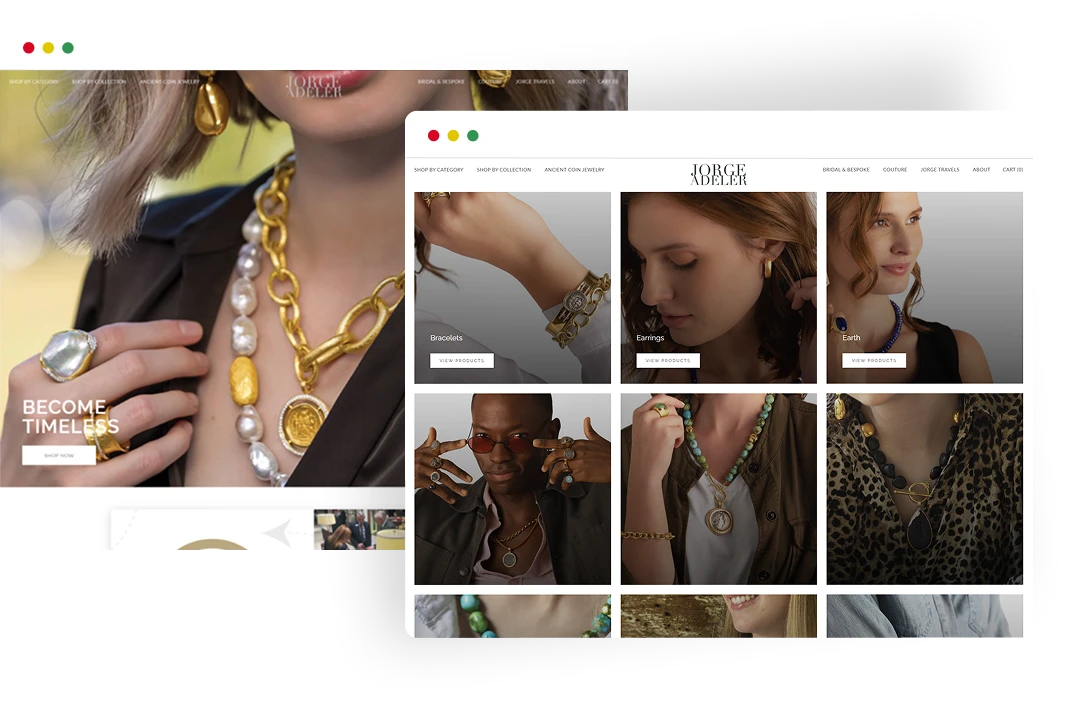
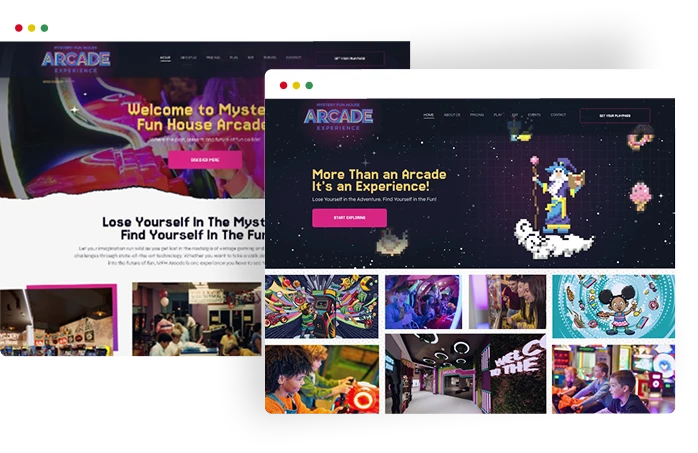
- Look for a business like yours in size and type. A good looking restaurant site does not prove they can handle 400 product pages.
- Ask to speak with a client from two or three years ago, not the one who launched last month. You want the person who has lived with the site.
A word on awards, since they sit at the top of most agency sites. We have a few, W3 and Davey awards, and I would still tell you not to hire us for them. An award means other designers liked the design, and it tells you nothing about how many calls the site brought in. Ask what happened to leads or sales after launch, and be wary if the answer is only about traffic.
Read what the web design quote includes, line by line
Two quotes for “a new website” can differ by $20,000 and both be fair, because they are for different amounts of work. A quote that is one line and one number cannot be compared to anything. Ask for the scope in writing, and check that it covers these.
- How many pages or page templates are included, and what an extra one costs.
- Who writes the content. This is the item that stalls more projects than any other.
- The redirect plan, if you are replacing a site.
- Forms, call tracking and analytics setup.
- Training for your team on making their own edits.
- How long fixes are covered after launch. Ours is 30 days, already on the schedule.
- Hosting and maintenance, and if either one is required.
- The payment schedule. Ours is 30 percent to start, 40 percent when the site is working in WordPress, and 30 percent at launch.
- What pauses or restarts cost. We charge a restart fee when a project stalls for more than a month, and we say so up front.
Pricing usually comes one of three ways. A fixed price for a defined scope is what most businesses should want. Hourly billing suits small jobs and open ended fixes. A monthly retainer suits ongoing work, and it should never be the only way to buy a website.
On the number itself, published figures are all over the place, which tells you how wide the market is.
| Source | What it says a website costs |
|---|---|
| Network Solutions | $3,000 to $20,000 from a small agency, $10,000 and up from a large one |
| Madison Marketing | $16,000 to $30,000 for a basic quality site |
| Clique Studios | Agency rates of $100 to $225 an hour |
| PixelChefs | $12,000 to $25,000 for most service business sites, $5,000 to $6,000 for a facelift |
Our fuller ranges are on the web design pricing page. A range is useful because you can take it to whoever signs off before you sit through three sales calls.
Ask what happens after launch, and what happens when you leave
Launch day is the start of owning a website, so ask about year two.
Find out if your own staff can add a page, change a price or swap a photo without calling anyone. Ask for a demonstration, not a yes. Orbit Media’s guide to choosing a web designer makes the same point, and it is the best of the guides I read. Ask who you will talk to when you email a year from now. And ask if any monthly fee is required to keep the site running. Optional hosting and maintenance is normal. A site that stops working when you stop paying is a rental.
Then ask the awkward one, which is what you get if you part ways and how long it takes. You want the site files, the database, every login and a transfer to your own hosting within days. A company that answers this easily is not planning to keep you by making it hard to leave.
Assume the company uses AI somewhere in its work. The useful thing to ask is where, and who checks what it produces.
Red flags when choosing a web design company
Any one of these is worth a direct conversation. If you see two or more, keep looking.
- They guarantee rankings or a traffic number. Nobody controls Google.
- They want to register the domain or open the hosting for you, in their name.
- The site runs on their own private platform that no other developer can work on.
- They quote a redesign without asking to see your current site’s data.
- The quote is one line.
- The contract renews on its own, or runs longer than a year with no exit.
- They cannot tell you who will do the work.
- They never ask what a customer is worth to you. A company that does not ask is designing a picture, not a sales tool.
A scorecard for comparing web design companies
Put your two or three finalists through the same seven checks. The first three are pass or fail. If a company fails one of those, the other four do not matter.
| Check | A good answer | Fail if |
|---|---|---|
| Account ownership | Everything in your name, your card | They hold the domain or hosting |
| Existing URLs | Shows you a URL list from a past project | “We will redirect at the end” |
| Exit terms | Files, logins and transfer within days | Vague, or a fee to leave |
| How it is built | Tells you plainly, and the price matches | Page builder at a custom price |
| Portfolio | Live sites, two years old, still fast | Screenshots only, no old clients to call |
| Quote | Itemized scope, schedule and payment terms | One line and a total |
| After launch | Your staff can edit, and they show you how | Every change is a ticket |
Where I go back and forth is location. We are based in Winter Garden, Florida and work with clients across the country, so I am biased toward saying it does not matter where the company is. I am not sure that holds for everyone. Some owners want to sit across a table from the person building their site, and that is a fair thing to want. I would only say that the seven checks above matter more than the zip code.
When you do not need a web design company
Not every business needs a web design company.
If your budget is under $5,000, a good freelancer or a website builder will serve you better than the cheapest agency you can find. Alex laid out that choice, with prices, in web design agency vs freelancer vs DIY website builder. If your site ranks and brings in calls and only looks dated, you likely need a facelift, not a rebuild. And if you are not sure what is wrong with the site you have, a technical SEO audit at $4,000 to $5,000 will tell you before you commit to five figures.
How to choose a web design company FAQ
Published figures range from $3,000 to $30,000 for a small business site, depending on size and how it is built. Our own builds run $12,000 to $25,000 for most service businesses, with a facelift on an existing site at $5,000 to $6,000.
Ask who will own the domain, hosting and logins. Ask what happens to your current URLs. Ask how the site is built, what the quote includes, who you will deal with after launch, and what you receive if you leave. Those six cover most of what goes wrong.
You should, and it should be in the contract. The domain, the hosting account and every login belong in your name from the first day, not handed over at the end. If a company will not agree to that, choose another one.
Only if meeting in person matters to you. The work itself is done the same way from anywhere. A local company that fails the ownership check is a worse choice than a remote one that passes it.
About two months for a small site and three to four months for a standard build of 20 or more pages. The most common delay is content, so ask who is writing it and when it is due.
Choose the web design company you could fire
Every check in this guide comes down to one idea, which is that you should be able to leave. That means your accounts in your name, your URLs on a list, a site your own staff can edit, and an exit that takes days. A company that sets you up that way expects you to stay because the work is good.
That is how we try to work at PixelChefs, and you can hold us to the same scorecard. Our web design services page covers the process and the prices, and our website migration page covers how we handle the URL list.