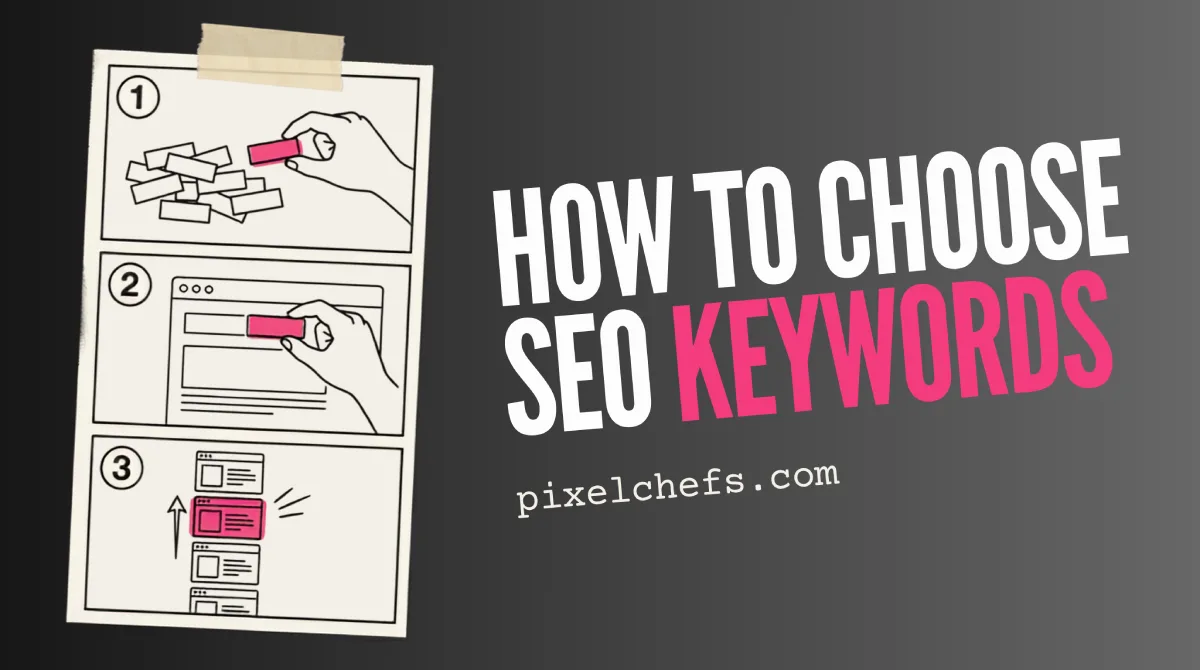
SEO keywords are the words and phrases people type into search engines to find information, products, or services. When someone searches “how to train a puppy” or “best running shoes for flat feet,” those are keywords, and they decide which websites show up in the results.
Keywords are the bridge between what people search for and the content you publish. Build your pages around the phrases your customers use, and you show up at the moment they look. A plumber in Chicago targeting “plumber in Chicago” and “fix leaking pipes Chicago” meets local customers exactly when they need one. Skip that step, and even a beautifully built site sits invisible.
This guide covers the types of keywords that matter, how to find the ones worth targeting, and how to use them in your content without sounding like a robot wrote it.
Table of Contents
Why Keywords Matter for Your Business
Keywords are the foundation SEO is built on. Everything else, the technical work, the content, the links, exists to help you rank for the terms your customers search.
The first reason is language. Keywords force you to speak the way your customers do. If they search “responsive web design” and your site only ever says “website building,” you lose them to a competitor who used their words. The second is visibility, since search engines rank pages that match what people ask for, and matching starts with knowing the phrase. The third is efficiency. The right keywords bring visitors who already want what you sell, which beats paying to interrupt people who do not.
Keywords also make progress measurable. Track which terms bring traffic and which bring customers, and your strategy stops being guesswork.
Types of Keywords in SEO
Keywords can be sorted two ways, by what the searcher wants (intent) and by what the keyword looks like (length, branding, location, timing). Here is the full picture:
| Keyword Type | Example | What the Searcher Wants | Best Page to Target It |
|---|---|---|---|
| Informational | how to fix a leaking faucet | An answer or explanation | Blog post or guide |
| Navigational | PixelChefs contact | A specific site or page | Your brand pages |
| Commercial | best CRM for small business | To compare before buying | Comparison or review content |
| Transactional | buy standing desk free shipping | To purchase now | Product or service page |
| Short-tail | running shoes | Broad browsing, early research | Category or pillar page |
| Long-tail | waterproof trail running shoes for wide feet | Something very specific | Product page or focused post |
| Branded | Nike running shoes | A specific company’s offering | Brand and product pages |
| Non-branded | comfortable running shoes | Any good option | Content and category pages |
| Local | running store near me | A nearby business | Location and service pages |
| Seasonal | Black Friday shoe deals | Time-limited offers | Seasonal landing pages |
| Evergreen | how to lace running shoes | Info that never expires | Long-lasting guides |
The four intent types deserve a closer look, because matching intent decides your content’s fate more than any other factor.
Informational Keywords
These are searches for answers. They usually start with “how to,” “what is,” or “guide to.” The searcher wants to learn, not buy. Content targeting these keywords should answer the question fully, because that is how you earn the click and the trust that comes with it.
Navigational Keywords
These searchers already know where they want to go and use Google as a shortcut. “Facebook login” and “Amazon customer service” are navigational. For your own business, these are your brand searches, and ranking for them is table stakes. If someone searches your company name and finds a competitor or an outdated listing, fix that first.
Commercial Keywords
Commercial searches are research before a purchase. They carry words like “best,” “top,” “review,” and “vs.” These searchers are comparing options, which makes them valuable, since a well-built comparison or buying guide can be the last thing they read before choosing you.
Transactional Keywords
Transactional searches signal a wallet coming out. “Buy,” “discount,” “order,” “near me,” and “for sale” mark someone ready to act. Your product pages, service pages, and landing pages should own these terms, because the searcher does not need convincing, only a clear path to purchase.
Long-Tail vs Short-Tail Keywords
The length split matters enough to spell out, because it shapes strategy for every new website.
| Short-Tail | Long-Tail | |
|---|---|---|
| Length | 1 to 2 words | 3 or more words |
| Example | pizza delivery | gluten free pizza delivery open late |
| Search volume | High | Low to moderate |
| Competition | Very high | Low |
| Buyer intent | Vague, still browsing | Specific, closer to action |
| Best for | Established sites building broad reach | New sites and competitive markets |
The practical strategy for most businesses is stacking long-tail wins first. Someone searching a long-tail phrase knows what they want, so those pages convert at a rate short-tail traffic rarely touches. Rank for enough specific phrases, and the authority you build starts lifting you on the broader terms too.
How to Find Valuable Keywords
Google Search Console
Start with the keywords already working. Search Console’s performance report shows every query your site appears for, your average position, and how many clicks each earns. The gold sits in positions 5 through 20, terms where you already rank but not well, because improving an existing page is faster than ranking a new one.
Google Keyword Planner
Google’s free planner generates keyword ideas from a seed term or a URL, with search volumes and competition levels straight from the source. It was built for advertisers, so the volume ranges are broad, but as a free starting point for what people search and roughly how often, it earns its place.
Competitor Analysis
Your competitors have already done research you can borrow. Tools like Ahrefs and Semrush show every keyword a competitor ranks for, which hands you two lists at once, the terms you are missing entirely, and the terms where their content is weak enough to beat. Look for keywords with real volume and modest competition where you could publish something clearly better.
Google Autocomplete
Type a keyword into Google slowly and read the suggestions. Every autocomplete entry is a real search other people make, which makes this the fastest free research tool there is. Work through variations of your main terms, then scroll to the related searches at the bottom of the results page for another batch.
Reddit and Online Forums
Communities like Reddit and Quora show you the exact language customers use when no marketer is in the room. Browse the threads where your audience asks questions, and write down their phrasing. Those natural-language questions often become your best blog topics, and they are increasingly what people type into AI search tools too.
How to Use Keywords for SEO
Finding keywords is half the job. Placement is the other half, and there are six spots that matter most:
- Page title. Put the main keyword early, like “Homemade Sourdough Bread Recipe | Fresh and Easy Steps,” and stay under 60 characters so nothing gets cut off in results.
- Headings. Work keywords into your H2s and H3s where they fit naturally, and vary the phrasing instead of repeating one term.
- Body copy. Weave keywords into sentences a human would write. If the term is “budget meal prep,” then “Budget meal prep saves time and money, and it starts with planning five affordable recipes a week” reads fine. The read-aloud test settles any doubt, since stuffed copy sounds broken the moment you speak it.
- Meta description. Include the keyword while selling the click, something like “Learn how budget meal prep cuts your grocery bill, with weekly plans and easy recipes.”
- URL. Keep it short and descriptive, site.com/budget-meal-prep-guide instead of site.com/blog/post123.
- Image alt text. Describe the image, “beginner downward dog tutorial” instead of “image123.jpg,” which helps search engines and screen readers at once.
One page, one primary keyword. Support it with a handful of close variations, and give every other keyword its own home.
Keyword Mistakes That Waste Your Effort
The most common mistake is chasing keywords your site cannot realistically win yet. A new website targeting a term dominated by household names is a year of effort for nothing, when the same effort on long-tail terms would already be paying.
Keyword stuffing is the opposite failure, repeating a phrase until the page reads like a machine wrote it. Search engines penalize it and readers bounce off it, so it loses twice. Ignoring intent is quieter but just as costly, since ranking an informational page for a buying keyword brings traffic that looks at your article and leaves.
Watch for keyword cannibalization too, which happens when several of your pages target the same term and compete against each other, splitting authority none of them can afford to lose. If your business serves a specific area, skipping local keywords hands nearby customers to whoever did not skip them. And the mistake that quietly undoes everything else is never checking the data, because a keyword strategy that does not adjust to what the numbers say is just a guess with a spreadsheet.
Measuring Keyword Performance
Track your rankings in Google Search Console, Ahrefs, or Semrush, checking your money terms weekly and running a broader review monthly. Group keywords by theme, product lines, services, locations, so patterns show up faster than they would in one long list.
Rankings alone do not tell the story, though. A keyword ranking third that never converts is worth less than one ranking eighth that brings customers. Layer in engagement and conversion data, time on page, bounce rate, and what visitors from each term actually do, and you will find the quiet performers worth more investment.
Then act on it. Push harder on the terms bringing customers, rework the content behind the ones bringing only traffic, and retire the ones bringing neither. Keyword research is not a task you finish once, it is a loop you run, and the businesses that run it consistently keep showing up while competitors wonder what changed.
Frequently Asked Questions
A good keyword combines relevance to your business, reasonable search volume, and manageable competition. Relevance means the keyword accurately reflects what you offer and what users are looking for. Search volume indicates how many people are searching for that term, with higher numbers generally being better. Competition refers to how difficult it will be to rank for that keyword based on how many other websites are targeting it. The best keywords for your business strike a balance between these factors, having enough search volume to generate traffic while not being so competitive that ranking becomes impossible.
A primary keyword is the main term you want a specific page to rank for in search engines. It represents the core topic of the page and should appear in important elements like the title tag, H1 heading, and throughout the content. Each page on your website should target a unique primary keyword to avoid competing with your own content.
Keyword stuffing is the practice of excessively repeating keywords throughout your content in an unnatural way in an attempt to manipulate search rankings. Examples include adding lists of keywords at the bottom of pages, inserting keywords into content where they do not belong, or repeating the same phrase multiple times in quick succession.
Keywords can be categorized in several ways. By length, we have short-tail keywords (1-2 words), mid-tail keywords (3 words), and long-tail keywords (4+ words). By intent, keywords fall into informational, navigational, commercial, or transactional categories. By specificity, keywords range from generic (broad terms like “shoes”) to specific (“men’s waterproof hiking boots size 10”).
There is no fixed keyword density percentage that guarantees good rankings. Instead of focusing on an exact number, aim to include your keywords naturally throughout your content where they make sense. Your primary keyword should generally appear in your title, at least one heading, the first paragraph, and several times throughout the content, depending on length.
Yes, you can and should target multiple related keywords on a single page. Start with one primary keyword that represents the main topic, then incorporate several secondary keywords that are closely related. For example, a page about “home exercise equipment” might also target related terms like “home gym essentials,” “fitness equipment for small spaces,” and “affordable workout gear.”
Put Your Keywords to Work
Keywords only pay off when the research turns into pages, and the pages turn into rankings. Start with the terms your customers already use, match every page to one clear intent, and check the data monthly so the strategy keeps sharpening. If you would rather have the research and strategy handled for you, our SEO services cover keyword research through content and everything after it, or you can talk through your strategy with a consultant and run the plan yourself.